
TanulásKözösség16+ évBeltéri
Az élet mint munka - Mindent optimalizálnunk kell?
Life as Work – Do We Have to Optimize Everything?
2026. október 18., vasárnap · 11:00Cafe HardenbergIngyenes
Megnyitás: MeetupFelnőtt beszélgetőkör az önoptimalizálás nyomásáról.
Leírás
Fordítás magyarra…
# Life as Work – Do We Have to Optimize Everything? We live in a world that constantly encourages us to become better versions of ourselves. We try to manage our time more effectively, develop healthier habits, acquire new skills, and make the most of every opportunity. Productivity, efficiency, and continuous improvement have become familiar expectations, not only in our professional lives but also in how we approach everyday activities. We measure our steps, track our sleep, plan our personal development, and search for ways to make our routines more effective. Even our free time can begin to feel like something we should use productively. There are good reasons to value improvement. Scientific discoveries, technological innovations, and access to education have expanded human possibilities. The ability to learn, adapt, and shape our circumstances can give us greater independence and control over our lives. But **at what point does the opportunity to improve become a pressure to constantly achieve more?** What begins as a personal ambition can gradually turn into an expectation. We may start viewing ourselves as projects that require endless attention, investment, and development. Our understanding of success is not formed in isolation. Family, education, social background, economic conditions, and cultural values influence what we consider a meaningful or successful life. For some, success means professional achievement, financial independence, or personal growth. For others, it may mean having time for friendships, family, creative interests, or simply enjoying everyday experiences. Yet modern life often encourages us to evaluate these different possibilities through the same principles of performance and efficiency. Technology offers an interesting example. We have developed countless tools to reduce effort and save time. We communicate instantly, automate routine tasks, and gain access to information within seconds. Nevertheless, our days do not necessarily feel less demanding. The time we save often becomes available for additional responsibilities. **Are we becoming more efficient in order to live better, or are we simply creating more things to accomplish?** Even activities that traditionally belong to leisure can acquire a practical purpose. We exercise to maintain our health, read to improve our knowledge, travel to broaden our perspectives, and rest to recover our energy. These motivations can be valuable, but they raise another question: must everything we do contribute to some future benefit? Could an afternoon spent doing nothing, an aimless walk, or a conversation without any particular purpose be meaningful in itself? The same tension appears in our relationships. When networking, personal branding, and professional connections become increasingly important, we may begin to evaluate social interactions according to the opportunities they provide. But friendship, curiosity, affection, and shared experiences do not necessarily follow the logic of investment and return. There is also a broader social dimension. Economic systems, professional competition, and cultural expectations influence how we organize our lives. The possibility of choosing a simpler or less demanding lifestyle depends partly on our material circumstances. Not everyone has the same freedom to reduce working hours, decline opportunities, or prioritize leisure over financial security. And even attempts to escape the pressure of productivity can become new forms of self-improvement. We may try to become more mindful, more minimalist, or better at relaxing. Perhaps the deeper issue is not whether progress and ambition are desirable, but whether every aspect of human existence should be measured by their standards. After all, greater efficiency does not automatically mean greater satisfaction, just as having more opportunities does not necessarily make our choices easier. This brings us to the central question: **Can we create a fulfilling life without constantly treating ourselves and our experiences as something that needs to be improved?** Perhaps the challenge is to distinguish between changes that genuinely enrich our lives and expectations that keep us pursuing goals without ever feeling that we have achieved enough. In this session, we will examine how the pursuit of efficiency, achievement, and personal development influences our understanding of freedom, happiness, success, and the good life. We will focus on six central questions: 1. **Why has self-optimization become such an important part of modern life?** 2. **How do social expectations, economic conditions, and personal backgrounds influence our definitions of success?** 3. **Does greater efficiency give us more freedom, or does it simply create additional demands?** 4. **Can leisure, friendship, learning, and personal experiences have value without serving a particular goal?** 5. **Where is the boundary between meaningful personal growth and the pressure to constantly improve ourselves?** 6. **What would a life based on the idea of "enough" look like, and is it realistically possible in modern society?** This will be an open and thoughtful discussion bringing together perspectives from philosophy, sociology, psychology, economics, culture, and everyday experience. Together, we will reflect on what we gain from our desire to improve and what we might overlook along the way—and consider whether living well sometimes means allowing things to remain exactly as they are. *** 📅 **Event Details** 🗓️ **Date:** Sunday, 18 October 2026 ⏰ **Time:** 11:00 📍 **Location:** Cafe Hardenberg, Hardenbergstraße 10, 10623 Berlin 📱 **WhatsApp:** For preparation materials, updates, and directions, join the group chat. Make the introduction more conciseReduce repetition around efficiency [Group Chat Bio KI](https://chat.whatsapp.com/Ba8ZAaH2Yuk6FGmD3LLO7H)
Ez is érdekelhet

okt. 14., Sze
Out-of-the-Box #2: Természet & éjszaka
Zion-templom
okt. 14., Sze · 08:30
SEPAWA Congress 2026
Estrel Berlin
okt. 14., Sze · 09:00
Being Linguistique – Az írás művészetéről
Reinickendorfi Helytörténeti Múzeum
okt. 14., Sze · 09:00
Globális Megújuló Energia Kongresszus
Berlin, Németország
okt. 14., Sze · 09:30
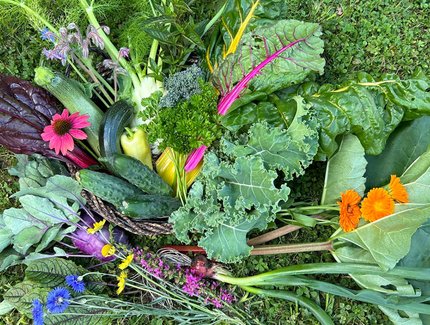
Fedezd fel a termények változatosságát az érzékeiddel
Botanikus Kert és Botanikai Múzeum
okt. 14., Sze · 10:00
Természet és német történelem: Hit – Biológia – Hatalom
Német Történeti Múzeum Pei-épület